
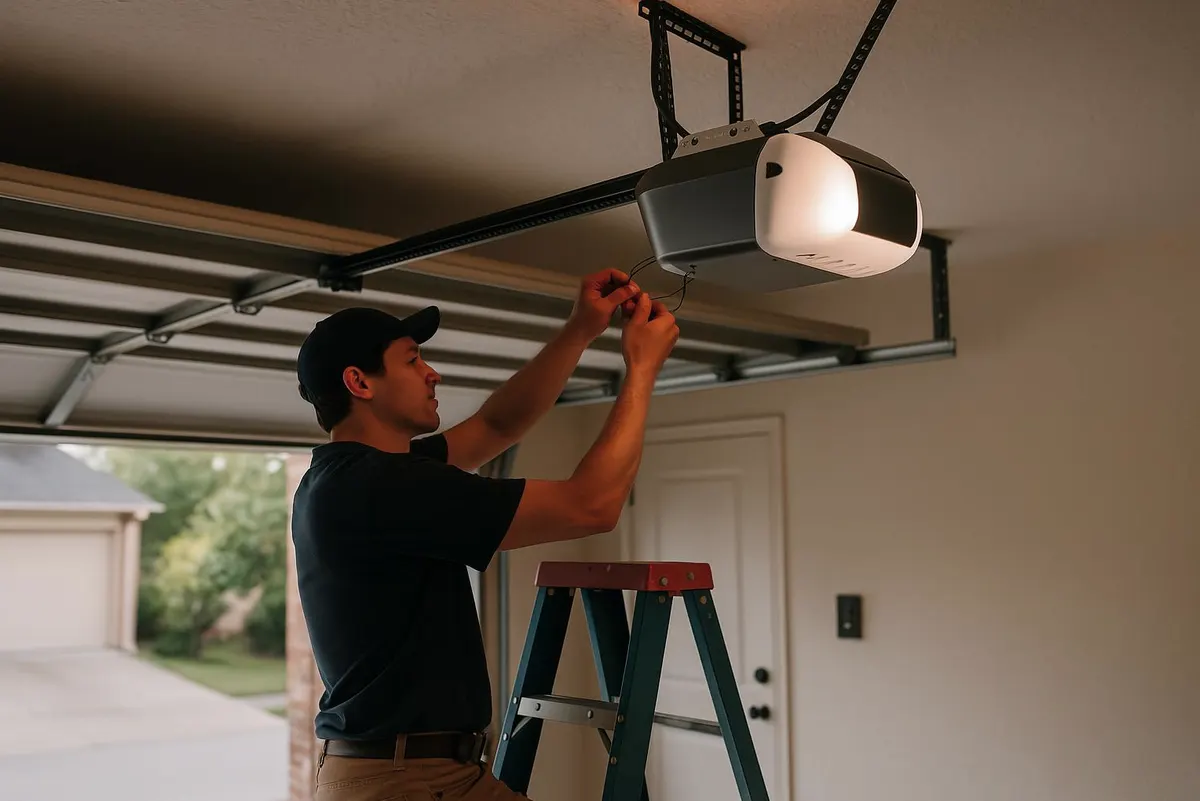
Garage Door Reverses Before Closing? Here's What We Find in Fruitland Park
A typical call looks like this: the homeowner presses the remote, the door starts down, gets a few inches or a foot off the ground, then stops and goes right back up — every single time. Or the door won't even attempt to close; it just sits there while the opener light blinks. After a summer of afternoon downpours and the humidity swelling wood and composite panels, this is one of the most common service calls we get across Fruitland Park, Leesburg, and The Villages heading into the fall.
What This Looks Like
- Door reverses a few inches after starting to close, with no visible obstruction
- Door closes fine at night but reverses during the day (often a sensor sun-glare issue)
- Opener light blinks a set number of times — most brands use a blink code to point at the sensors
- Door won't close at all; opener hums or does nothing when you hit the button
- Door closes partway then reverses only on humid or rainy days
Causes, in the Order a Technician Checks Them
1. Photo-Eye Sensors
This is the first thing any tech checks, and it solves the problem more often than anything else on this list. The two small sensors sit a few inches off the ground on either side of the track. If they're misaligned, dirty, or one is slightly knocked out of position (easy to do with a broom, a bike, or lawn equipment), the door reads it as an obstruction and reverses. Direct morning or afternoon sun can also wash out the sensor and trigger a false reversal, which is why some doors only act up at certain times of day. The fix: wipe both lenses clean, confirm the indicator lights are solid (not blinking) on both units, and realign them so they're pointed at each other dead-on.
2. Obstructions in the Track or Door Path
Leaves, wind-blown debris from a storm, or even a small toy can sit in the track or beam path without being obvious. A tech runs the door manually and watches the full travel path before touching anything electronic.
3. Opener Force and Limit Settings
Every opener has a force setting that tells it how much resistance to tolerate before assuming it's hit something and reversing. If the limit is set too sensitive, normal friction from a slightly swollen door panel or a track that's picked up a little rust can trigger a reversal. This gets checked and adjusted on the opener's control panel.
4. Sensor Wiring
Humidity and the occasional rodent chewing through insulation in a garage can corrode or nick the low-voltage wiring that runs to the sensors. A damaged wire causes intermittent signal loss, which looks exactly like a sensor problem but isn't fixed by cleaning or realigning. This gets tested with a multimeter and the wire is re-run or spliced as needed.
5. Weak or Broken Springs
If the door won't close at all, or it closes abnormally fast at the end of travel, a weak or broken torsion spring is often the reason. Springs here take more cycles of stress than in drier climates because humidity accelerates rust on the coils, and the wind-load demands on garage doors in hurricane-prone areas mean a worn spring shows its age faster. A technician checks spring tension by watching how the door balances when disconnected from the opener — this is not a DIY repair, since torsion springs are under heavy tension.
6. Bent Track or Worn Rollers
Years of humidity and temperature swings can warp a track slightly or wear down plastic rollers until the door binds partway through its travel, which the opener interprets as an obstruction. A tech checks for gaps between the rollers and track and for any visible bend, especially near the bottom section.
7. Circuit Board or Logic Unit
If every mechanical and sensor check comes back clean, the last stop is the opener's circuit board itself. Power surges from storms can degrade these over time, and in older units the board sometimes needs replacing outright rather than repairing.
When to Call Fruitland Park Garage Door Solutions
If you've wiped the sensors, cleared the track, and the door still reverses or won't close, it's time to call a technician rather than keep adjusting the force dial — that can mask a spring or wiring problem and create a bigger failure later. We handle Garage Door Opener Repair & Installation and Spring Replacement as two of our most common calls tied to this exact symptom, and we'll test sensors, wiring, balance, and track alignment on the same visit so you're not paying for multiple trips.
If your garage door in Fruitland Park, Leesburg, Lady Lake, or anywhere in Lake County is reversing or refusing to close, call Fruitland Park Garage Door Solutions today for a same-week diagnosis and fair, upfront pricing.